The Ultimate Setup Guide for Your Ricoh Scansnap Ix2500 Document Scanner
Introduction
The Ricoh Scansnap Ix2500 Document Scanner is designed for professionals and small offices that need a reliable, fast way to digitize paper. This guide walks through everything needed to get the scanner out of the box and running smoothly: hardware setup, software and driver installation, network configuration, practical scanning workflows, routine maintenance, and troubleshooting. It also offers a balanced analysis of the scanner’s strengths and limitations and a short comparison to other popular office scanners to help buyers decide if the Ix2500 is the right fit for their workflow.
Product Overview and Real-World Use Cases
At its core, the Ricoh Scansnap Ix2500 is an automatic document feeder (ADF) scanner aimed at users who deal with moderate to high volumes of paper: accounting teams archiving receipts, legal firms digitizing client files, HR departments onboarding employees, and home office users converting personal records into searchable PDFs. Buyers typically care about reliability, ease of setup, OCR accuracy, duplex scanning, and compatibility with existing document management systems. The Ix2500 focuses on practical performance and integration rather than niche specialty features.
What buyers typically prioritize
- Reliability: consistent paper feeding and low jam rates for mixed batches (receipts, business cards, stapled or folded documents).
- Scanning speed and duplex capability: the ability to process two-sided documents without manual intervention.
- Software and OCR quality: accurate searchable text output and straightforward workflows to save or route files.
- Connectivity: USB, Wi‑Fi, or network options so the device can serve multiple users.
- Ease of maintenance: replaceable rollers, accessible feed path for cleaning, and straightforward firmware updates.
Detailed Product Review and Analysis
This section examines the Ix2500 across hardware, software, scanning performance, and long-term ownership costs.
Hardware and build quality
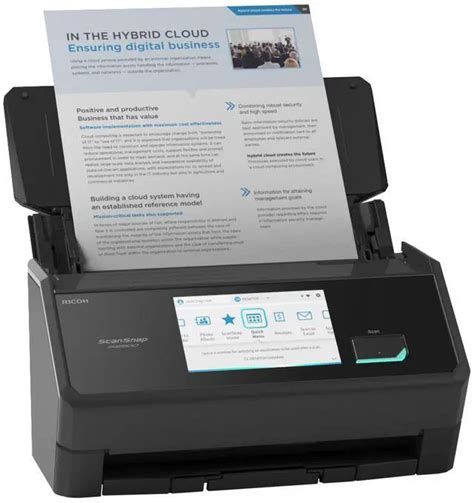
The Ix2500 is built around an ADF designed for batch scanning. The chassis and feed mechanism emphasize durability for repeated use in small office environments. Critical touchpoints—such as the paper guides, feed rollers, and output tray—are engineered for everyday handling. For users who process mixed paper sizes (from receipts to legal-size sheets), a well-designed ADF and reliable guides reduce misfeeds and jams.
Software and ecosystem
Most modern scanners derive value from their software suites that manage scan profiles, OCR, compression settings, and integrations with cloud services or document management systems. The Ix2500’s included software and compatibility with third-party document management tools determine how well it fits into an existing workflow. Buyers should expect the ability to create custom profiles (for color, grayscale, compression levels, filename templates), perform optical character recognition (OCR) to produce searchable PDFs, and route scans automatically to folders, email, or a network share.
Performance and day-to-day use
In everyday usage the Ix2500 should handle common tasks reliably: multi-page reports, two-sided forms, receipts, and business cards. Key operational factors include warm-up time, how quickly the scanner recovers from occasional misfeeds, and the intuitiveness of its scan-buttons or status indicators. In a small office, practical performance matters more than peak speed numbers—consistent throughput and minimal time spent clearing jams or correcting mis-identified pages make a larger productivity difference.
Running costs and maintenance
Long-term ownership involves occasional consumables and maintenance: feed rollers, separation pads, and occasional sensor cleaning. The best practices include periodic cleaning following heavy scanning sessions, keeping the ADF free of dust and debris, and updating firmware to maintain compatibility with host systems. Ricoh users typically budget for replacement rollers only after high-volume use, but schedule monthly checks in busy environments.
Step-by-Step Setup Guide
The following steps apply to getting a typical ADF scanner like the Ix2500 up and running, covering physical setup, network connectivity, software installation, and first scans.
Discover deals on Laptops & Computers — updated daily.
Browse Now →1. Unboxing and physical setup
- Remove all packing materials and protective films from the scanner and trays.
- Inspect the ADF path for loose packing slips or tape.
- Position the scanner on a stable surface near a power outlet and the primary workstation or network connection.
- Extend input and output trays and adjust paper guides so documents feed squarely.
2. Power and initial tests
- Connect the power cable and turn the scanner on. Observe any front-panel indicators or display for status messages.
- Perform a quick self-test or demo scan if the device provides a built-in test function to ensure optics and feed mechanics are operating.
3. Driver and software installation
- On the scanning host (Windows or macOS), install the vendor’s driver and management software. If a bundled CD isn’t used, obtain drivers from the manufacturer’s support page—search the support site using the model name if needed.
- Run the setup utility and follow prompts to register the device, choose a default scanning profile, and select a destination folder for scanned files.
- Install any optional OCR modules or plugins if searchable PDFs are required.
4. Network and multi-user setup
- If the scanner supports Wi‑Fi or wired network connections, enable network mode in the scanner’s menu and follow the prompts to connect to the office network.
- For shared use, configure a central network folder (SMB) or use the scanner’s server-mode features to send scans to multiple users’ email addresses or document systems.
- For cloud workflows, configure routing profiles to push scans to an internal server or an on-premises document management system rather than a public cloud if privacy is a priority.
5. Create scanning profiles
- Create and save profile presets for common tasks: receipts (compressed color, small size), two-sided contracts (duplex, high-quality OCR), and bulk archive (black-and-white, high compression).
- Set consistent filename templates (date, department code, document type) to simplify later retrieval and indexing.
6. First production runs and validation
- Run a small batch representative of daily scanning material (mixed sizes, some double-sided) and verify resulting files for orientation, image quality, and OCR accuracy.
- Tweak brightness, deskew, and OCR language settings based on observed results.
Troubleshooting Common Issues
Even straightforward setups can run into issues. Here are common problems and practical steps to resolve them.
Paper jams and misfeeds
Check for torn corners, staples, or sticky notes. Use the scanner’s reverse-feed or manual-clear procedure, clean the feed rollers, and ensure the paper guides are snug but not overly tight. If jams are frequent with mixed media, process those materials separately (e.g., receipts vs. stapled contracts).
Poor OCR accuracy
OCR performance improves with clearer originals: increase scan DPI for small fonts, use grayscale or black-and-white for high-contrast text, and select the correct OCR language. For multi-language documents, configure additional language packs if available.
Network connectivity problems
Verify that the scanner and host are on the same subnet, ensure the network folder credentials are current, and check firewall settings if scans are not reaching a shared drive. For Wi‑Fi, confirm signal strength and prefer wired connections in busy office environments to reduce interruptions.
Pros & Cons
- Pros:
- Reliable ADF design for batch scanning and routine office use
- Flexible scanning profiles and OCR support for searchable archives
- Network-capable for shared use across small teams
- Accessible maintenance points for cleaning and roller replacement
- Cons:
- Higher upfront cost than simple duplex desktop scanners
- Consumable parts (rollers, separation pads) add to long‑term costs in heavy-use environments
- Requires some initial configuration to optimize OCR and routing for multi-user deployments
Comparison Table
| Model | Duplex | Connectivity | ADF Capacity | Best for |
|---|---|---|---|---|
| Ricoh Scansnap Ix2500 Document Scanner | Automatic duplex | USB, Network (Wi‑Fi or wired depending on configuration) | Medium (designed for day-to-day office batches) | Small businesses and teams needing reliable batch scanning and networked workflows |
| Fujitsu ScanSnap iX1500 | Automatic duplex | USB, Wi‑Fi | Medium (desktop-oriented) | Home offices and small teams wanting simple touch-button scanning |
| Brother ADS-2700W | Automatic duplex | USB, Wi‑Fi, Ethernet | Medium (office-focused) | Businesses seeking versatile connectivity and robust network sharing |
| Epson Workforce DS-530 | Automatic duplex | USB | Small to medium | Users wanting a compact, fast duplex scanner for personal or light-office use |
Buying Guide: How to Decide if the Ix2500 Is Right for You
When evaluating the Ricoh Scansnap Ix2500, consider the following factors to match scanner capabilities to real needs.
Scan volume and duty cycle
Estimate monthly scan volume. If daily batches are large (hundreds of pages), prioritize scanners with higher advertised duty cycles, service plans, or models specifically designed for production scanning. For moderate volumes (dozens to low hundreds per day), the Ix2500 and similar ADF scanners are appropriate.
Document types and special formats
Identify typical documents: receipts, ID cards, business cards, legal forms. If scanning many non-standard media (plastic cards, very thin receipts, or fragile historical documents), look for scanners with multi-feed detection, adjustable feed pressure, and drivers that support mixed media routing.
Looking for the best Laptops & Computers deals on Amazon?
See Deals →Connectivity and sharing
Decide how many users will access the device and whether scans must be sent to network folders, email, or a document management system. Choose a model with wired Ethernet for stable shared use in offices; Wi‑Fi is convenient for ad-hoc connections and small teams.
OCR and document management
Good OCR is crucial for searchable archives. Confirm that the scanner’s software supports the required OCR languages and that output formats integrate with existing document management workflows. If advanced document indexing or automated routing is required, evaluate third-party software compatibility.
Total cost of ownership
Account for initial cost plus consumables (rollers, pads), occasional maintenance, and potential software licensing for OCR or enterprise integrations. A slightly more expensive scanner with lower maintenance needs or better reliability can reduce operational costs over time.
Maintenance Tips for Longevity
To keep the Ix2500 running reliably:
- Schedule routine cleaning of the feed path and rollers after heavy use.
- Replace feed rollers or separation pads when multi-feeds increase or feeding becomes inconsistent.
- Keep firmware and software updated to maintain compatibility and security.
- Store the scanner in a dust-free environment and avoid placing it near high-traffic areas where debris can enter the ADF.
Conclusion
The Ricoh Scansnap Ix2500 Document Scanner is a practical choice for users needing a dependable ADF scanner with network-capable workflows, solid OCR support, and straightforward maintenance. It fits small offices and teams that digitize mixed batches of documents daily and require consistent, predictable performance. As with any scanner purchase, match expected monthly volumes, document types, and integration needs to the model’s features. With proper setup and routine maintenance, the Ix2500 can significantly reduce the time and friction involved in turning paper into searchable, organized digital files.